

Show support for Lybouv!
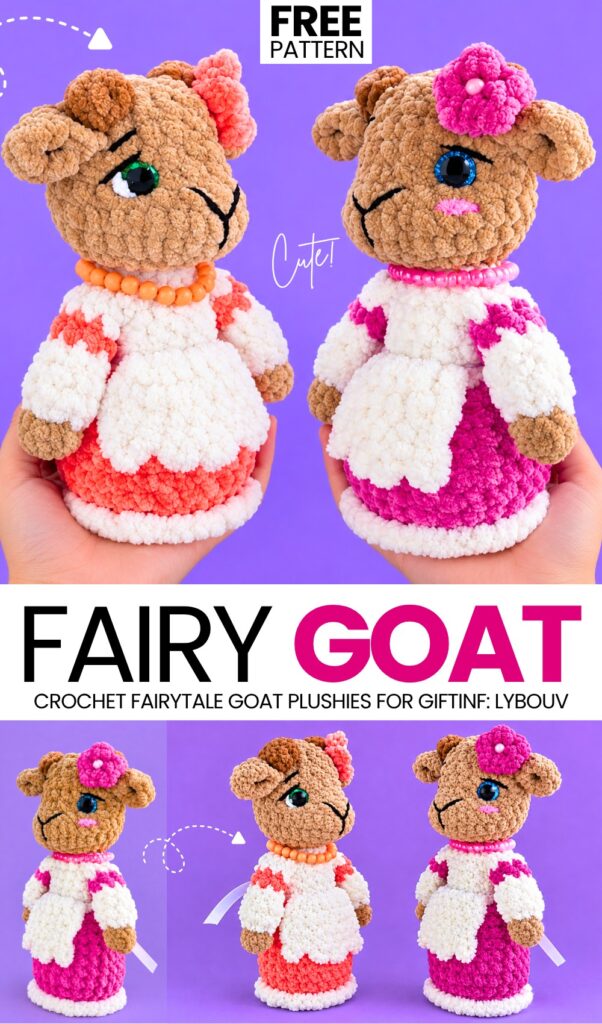
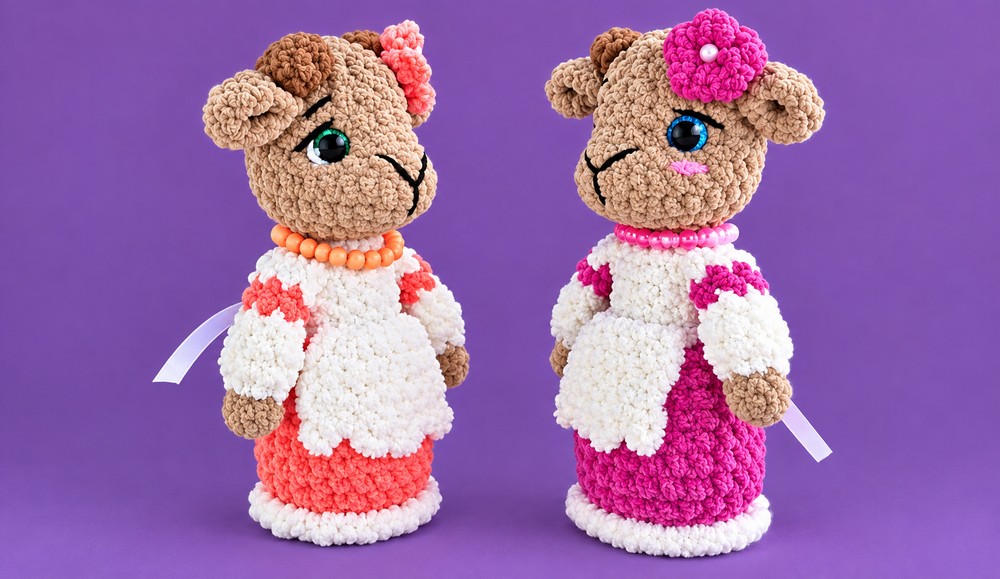
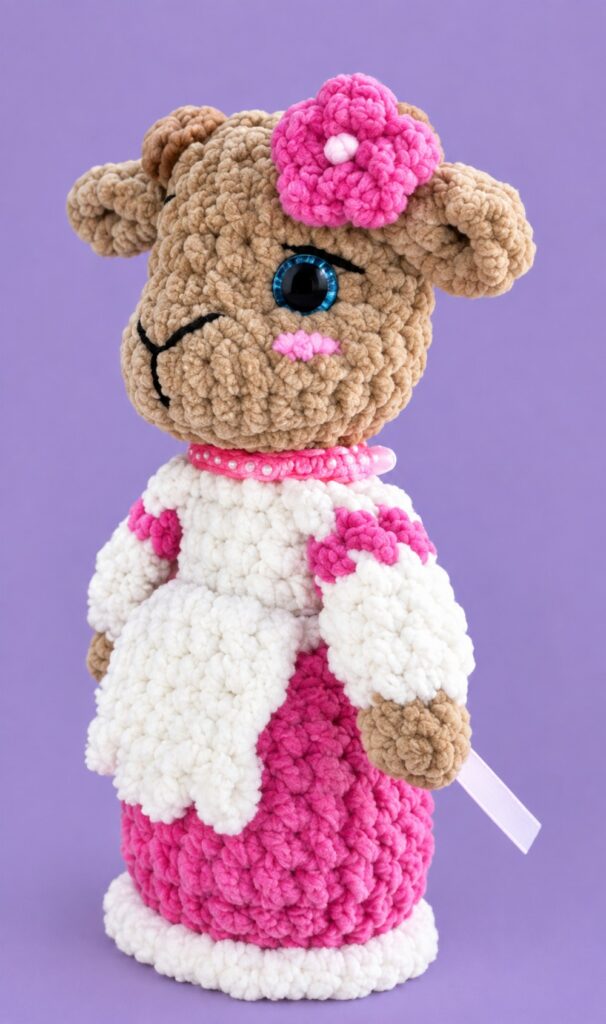
Learn to crochet a 17 cm fairytale goat plushie in one seamless piece using plush yarn. The process starts from the bottom of the skirt, continues up through the body, and transitions directly into the head.
As you work upward, you attach the arms, embed the ears, and form the horns natively – eliminating external sewing for major body parts.
Afterwards, you crochet a decorative apron overlay directly onto the front, edge the bottom hem, and assemble a small floral accessory. Final details include inserting safety eyes, sculpting the face, and adding beads or ribbons.
Tutorial to Crochet the 17 cm Fairytale Goat Plushie
Level: Intermediate
Why: Although the main pattern uses standard single crochet stitches without separate sewing for the body parts, it requires precise execution of intermediate amigurumi techniques:
In-place join technique: Incorporating flat components (arms and folded ears) directly into active working rounds while keeping proper spacing.
Specialty Cluster Stitches: Working 4-double-crochet bobbles/clusters with mid-round color changes to form the horns.
Facial Sculpting: Executing needle-sculpting (yarn-tufting) beneath the safety eyes to pull the facial features into shape.
Pattern Abbreviations & Materials
Pattern Abbreviations
MR: Magic Ring (Magic Circle)
sc: Single Crochet
hdc: Half Double Crochet
dc: Double Crochet
inc: Increase (2 sc in one stitch)
dec: Decrease (Invisible sc decrease)
ch: Chain
sl st: Slip Stitch
BLO: Back Loop Only
4-dc cluster: 4 double crochet cluster with a shared top (used for horns)
Materials
Plush Yarn: Main body color, clothing color, accent color (100 g / 120 m density)
Black Embroidery Thread: Fine cotton yarn (e.g., YarnArt Jeans) for facial features
Crochet Hook: 4.0 mm
Safety Eyes: 12 mm
Stuffing: Fiberfill / Polyester toy stuffing
Extras: Decorative beads, ribbons/lace, yarn needle, stitch markers
Are you a Beginner? Learn Crocheting Easily!
You can learn to crochet better with this goat plushie tutorial as a beginner:
Written Pattern?
Use the “ask” feature of the tutorial to retrieve the quick pattern. This method is designer-compliant!